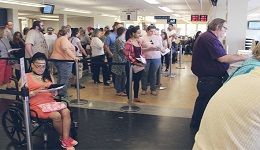
Someone getting in line at a Department of Motor Vehicles office in California will be waiting for up to 38 minutes on average, while it could stretch for over an hour and 20 minutes in Massachusetts. On the other hand, the average DMV wait time is only 10 minutes in Utah and Wisconsin.
There are obviously far more people applying for driving licenses and REAL IDs in California than in Utah or Wisconsin. Regardless, there’s still plenty of room for improvement - using queue management systems and digital transformation of existing processes to make the process of getting people in and out of a government department less painful and irritating.
As per data on DMV.com, the average wait time nationwide, for the United States, is 44 minutes before you are provided the service you came for. Ideally, it should be zero wait time, or less than 5 minutes. But realistically, considering the volume of people visiting DMVs every day, it can still be brought down to less than 30 minutes to make it a better visitor experience.
What we’re going to do first is to share the full list of DMV wait times for all 50 states plus Washington DC. Some states have long queues with people waiting in line for up to and over an hour, while others can get you in and out in less than 10 minutes. Let’s look at what these latter states are doing right, and come up with some actionable steps that the rest can take to reduce their DMV wait times.
Average DMV wait times for all 50 states
|
State
↕
|
Avg. DMV wait times
↕
|
Relative Wait Time |
|---|---|---|
| 🌴 California | 38 min |
|
| 🤠 Texas | 45 min |
|
| 🏖️ Florida | 34.55 min |
|
| 🌺 Hawaii | 1 hour |
|
| 🎡 New Jersey | 26 min |
|
| 🔔 Pennsylvania | 21 min |
|
| 🌵 Arizona | 22 min |
|
| 🚗 Michigan | 36.03 min |
|
| ⛰️ North Carolina | 35 min |
|
| 🍑 Georgia | 11 min |
|
| 🎓 Massachusetts | 1 hour 20 min |
|
| 🏙️ Illinois | 30 min |
|
| 🌰 Ohio | 14.45 min |
|
| 🏛️ Virginia | 24 min |
|
| 🏔️ Colorado | 43.25 min |
|
| 🍎 New York | 35 min |
|
| ❄️ Alaska | 28 min |
|
| 🐘 Alabama | 1 hour 8 min |
|
| ☕ Washington | 28 min |
|
| 🛶 Minnesota | 43 min 56 secs |
|
| 🎸 Tennessee | 44 min |
|
| 🦀 Maryland | 23 min |
|
| 🏹 Missouri | 15 min |
|
| 🌲 Oregon | 34 min |
|
| 🧀 Wisconsin | 10 min |
|
| 🌴 South Carolina | 66 min |
|
| 🏎️ Indiana | 8 min 11 secs |
|
| 🎷 Louisiana | 16 min |
|
| 🐝 Utah | 10 min |
|
| ⚓ Connecticut | 48 min |
|
| 🐎 Kentucky | 44 min |
|
| 🦞 Maine | 34 min |
|
| 🎰 Nevada | 41 min |
|
| 🎸 Mississippi | 38.75 min |
|
| 🤠 Montana | 45 min |
|
| 🌪️ Oklahoma | 40.05 min |
|
| 🌻 Kansas | 42 min |
|
| 🌽 Iowa | N/a |
|
| 🌶️ New Mexico | 14 min |
|
| ⚓ Rhode Island | 1 hour 15 min |
|
| 🌽 Nebraska | 30 min |
|
| 🦬 Wyoming | N/a |
|
| 💎 Arkansas | 12.6 min |
|
| 🐓 Delaware | N/a |
|
| 🥞 Vermont | N/a |
|
| 🥔 Idaho | 1 hrs 15 min |
|
| ⛰️ West Virginia | 1 hour |
|
| ⛰️ South Dakota | 1 hrs 45 min |
|
| 🏔️ New Hampshire | 22 min |
|
| 🦬 North Dakota | 1 hrs 45 min |
|
| 🏛️ Washington DC | 35 min |
|
How to reduce DMV wait times
There are two simple ways of reducing DMV wait times. One is digital transformation to enable online services, and the other one is the implementation of a queue management system.
1. Digital transformation of DMV branch services
Apart from the actual testing process for a driving license, pretty much everything else can be done online. Does your Department of Motor Vehicles allow you to begin the license application online? Does it enable you to do online vehicle registration, or pay a citation using eCommerce payment, or request a rescheduling of a hearing? Can you upload required ID documentation online, or do you have to carry it with you, and then they’ll collect it while you wait? These and other services related to renewals and changes of driving licences and Real IDs can be shifted online, reducing the number of people waiting at the DMV office.
Case study Indiana’s Bureau of Motor Vehicles (BMV) had a wait time of 40 minutes, buffeted by the volume of foot traffic (4 million people per year) and transactions (13 million - 4.6m driver records and 7.2m vehicle registrations). They eliminated the term ‘wait time’ and started tracking ‘visit times’ instead, and authorized branch managers to reduce this visit time in whatever ways possible. Also, they reduced the fee for online transactions to $5 below the in-branch fee, which moved a huge volume of work to the website (5 million visits per year). This seamless movement of visitors from offline to online, and then back to the physical branch (if needed) is what makes digital transformation projects a success. The result, for the Indiana BMV, was that their wait time fell from 40 minutes to 8.11 minutes - among the top three states with the lowest statewide average wait time for visitors at a DMV office.
2. Queue management system to reduce DMV wait times
Once your DMV has implemented a state-of-the-art digital queue management system, anyone coming to the DMV should be able to schedule an appointment online and arrive within a stipulated window. There may still be small waiting time, but you won’t spend all day in a huge queue, wondering when you’ll be called.
Many DMVs also show estimated wait times as a result of data and reports provided by the queue system. Some queue solutions will also show which DMV office or location near you will have the lowest wait time, and notify you when your turn comes. This will further ease your mind before you arrive and will help you plan for the visit.
Case study As of Oct 1, 2020, travellers will need a REAL ID or passport even for domestic flights within the U.S. To avoid long queues of people lining up at DMV offices as the deadline nears, New Jersey’s take-a-ticket queuing system is being used by all 39 of the state’s motor vehicle agencies. The state is issuing REAL IDs by appointment only through this system. This same process can be done quickly and efficiently, with zero wait times, by any state if they implement a virtual queue management system.