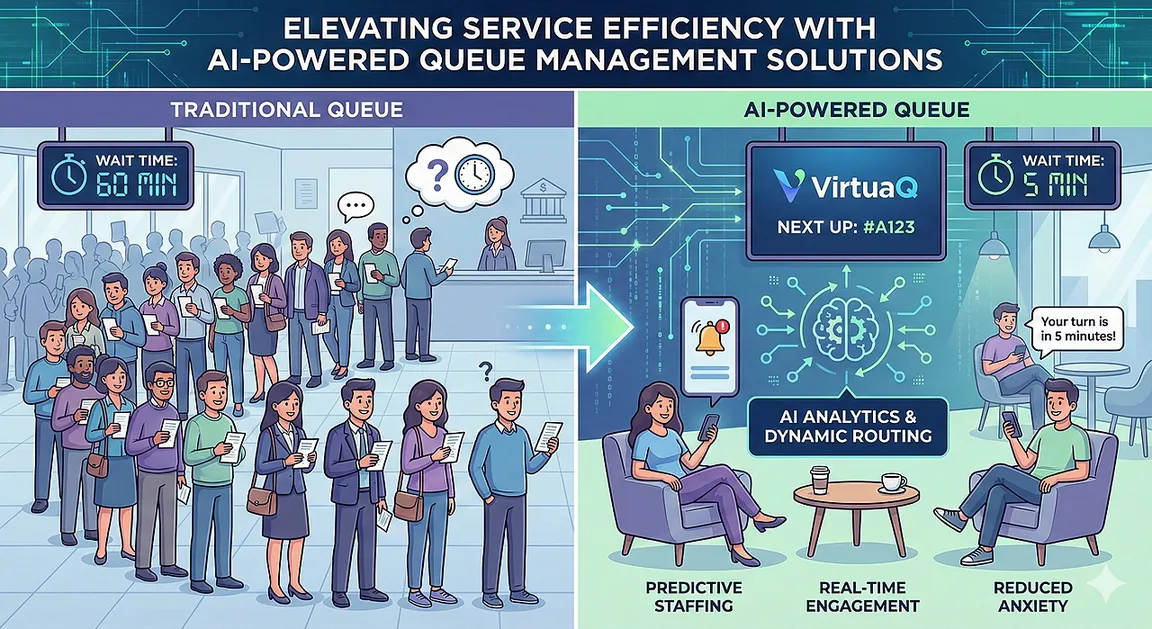
In an increasingly competitive landscape, ensuring swift and seamless customer experiences is crucial for businesses across various sectors. AI-powered queue management systems are emerging as a pivotal solution to enhance service delivery by streamlining operations and minimizing wait times. This article explores the transformative impact of such technologies, particularly focusing on VirtuaQ's capabilities.
What Are Queue Management Systems?
A queue management system (QMS) orchestrates how customers interact with service points in environments like hospitals, banks, and government offices. By reducing waiting times through technologies that issue paper or SMS tickets, these systems enable customers to arrive just in time for their services, thus improving overall satisfaction levels.
The Role of AI in Queue Management
Integrating AI-powered solutions into QMS offers several advantages:
- Predictive Analytics: AI analyses historical data to forecast peak times, allowing businesses to allocate resources efficiently.
- Dynamic Routing: Algorithms adjust queues in real-time based on current demand, significantly enhancing throughput during busy periods.
- Customer Engagement: Automated notifications keep customers informed about their status in line, which enhances transparency and reduces anxiety associated with waiting.
Key Features of Effective Queue Management Systems
The effectiveness of a queue management system hinges on its features. Here are essential components:
- Virtual Queuing: Customers can join the queue digitally, freeing them from physical lines and enabling them to manage their time better.
- Real-Time Data Monitoring: Dashboards provide insights into customer flow patterns, aiding decision-making and operational adjustments.
- Multi-Channel Check-In Options: Flexibility through mobile apps, kiosks, and web portals ensures accessibility for diverse user segments.
- Automated Notifications: Keeping customers updated via SMS or email improves their experience and keeps them engaged while they wait.
Unique Advantages of VirtuaQ
When comparing different queue management systems, VirtuaQ stands out for its distinctive features:
- Seamless Integration: VirtuaQ integrates effortlessly with existing enterprise systems, ensuring minimal disruption during implementation.
- Personalized Services: Customizable reporting allows businesses to tailor the system according to specific operational needs, leading to enhanced customer interactions.
- Scalability: Designed to accommodate varying volumes, VirtuaQ adjusts seamlessly to dynamic business requirements.
Statistical Evidence of Effectiveness
Research indicates that businesses implementing AI-driven queue management solutions witness substantial improvements. For instance, organizations report up to a 30% reduction in average wait times, resulting in increased customer satisfaction rates. A case study involving a major hospital revealed that integrating VirtuaQ reduced patient check-in times by 25%, significantly enhancing the patient experience.
Future of Queue Management
As technology continues to evolve, the future of queue management will likely be shaped by:
- Emerging Technologies: Innovations such as blockchain for secure transactions and augmented reality for customer guidance may redefine customer interactions.
- Enhanced Personalization: Utilizing machine learning to offer tailored recommendations and targeted promotions during the waiting period could further enrich customer engagement.
- Data-Driven Insights: Advanced analytics will empower businesses to understand customer preferences deeply, facilitating proactive service enhancements.
Implementation Challenges and Solutions
While adopting advanced queue management systems presents immense benefits, challenges may arise, including:
- Resistance to Change: Employees accustomed to traditional methods may resist new technologies. Providing comprehensive training can mitigate this challenge.
- System Compatibility: Ensuring compatibility with existing software is critical. Conducting thorough assessments before integration can help identify potential issues early on.
- Resource Allocation: Managing the allocation of staff during transition phases requires strategic planning to maintain service quality.
Return on Investment Analysis
Investing in a robust queue management system yields significant ROI. Companies often observe:
- Increased customer retention due to improved service efficiency.
- Enhanced employee productivity as automated processes reduce manual tasks.
- Higher revenue generation driven by increased traffic and shorter wait times.
Next Steps
To explore how VirtuaQ can transform your service delivery and enhance customer satisfaction, consider requesting a free demo today. Experience first hand the efficiency gains and operational excellence that our AI-powered queue management solutions deliver!
Frequently Asked Questions
What defines a queue management system?
A queue management system manages customer flow effectively, aiming to minimize wait times and optimize service delivery.
How do AI-enhanced queue systems function?
They utilize predictive analytics to anticipate demand, automate routing decisions, and improve staff deployment plans based on real-time data.
Why should I opt for a virtual queue system?
Virtual queues alleviate congestion and allow customers to engage with other activities while waiting, thereby enhancing overall satisfaction.
References
- VirtuaQ Healthcare Digital Transformation Case Study
- VirtuaQ Enterprise Integration
- AI-Powered Queue Management