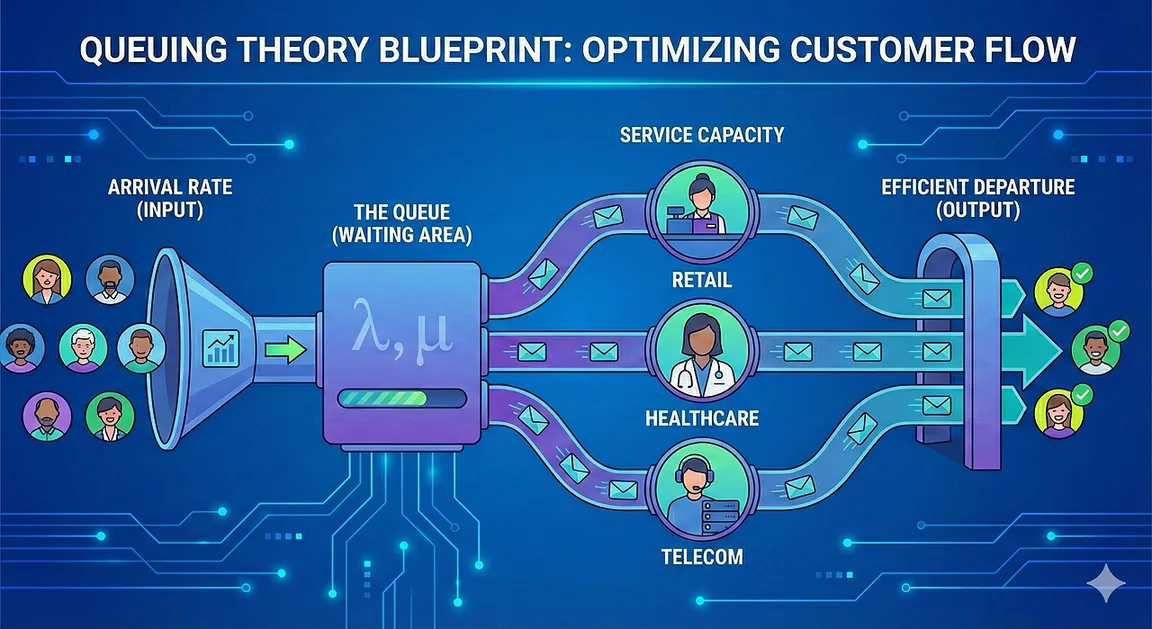
In today's fast-paced environment, effective queue management is essential for enhancing customer satisfaction and optimizing operational efficiency. Understanding queuing theory provides valuable insights into how to improve customer flow and reduce waiting times across various industries.
What Is Queuing Theory?
Queuing theory is a mathematical framework that investigates how lines form, operate, and dissolve, originally developed by Agner Krarup Erlang in the early 1900s. This theory helps businesses analyse critical elements such as:
- Arrival Rates: The frequency at which customers enter the queue.
- Service Capacity: The maximum number of customers that can be served simultaneously.
- Number of Servers: The total staff available to serve customers.
- Departure Process: How quickly and efficiently customers exit after receiving service.
By analysing these components, organizations can predict customer behaviour more accurately and streamline their operations effectively.
Why Does Queuing Matter?
Properly managed queues significantly impact customer experience. A well-organized line reduces frustration, enhances perceptions of service quality, and ultimately improves retention rates. Conversely, poor queue management can lead to negative experiences and lost business opportunities.
Practical Applications of Queuing Theory
Several real-world applications illustrate the importance of queuing theory across diverse sectors:
- Healthcare: Hospitals can minimize patient wait times through efficient triage systems based on queuing models, improving care delivery.
- Retail Environments: Retailers use queuing data to optimize staffing during peak hours, ensuring swift checkouts and enhanced shopper satisfaction.
- Telecommunications: Call centers rely on queuing systems to balance incoming calls with available agents, accelerating response times and boosting customer support effectiveness.
Elements Influencing Queuing Efficiency
To maximize queue efficiency, businesses must consider several key factors:
- Queue Discipline: The method used to prioritize service order, including first-in-first-out (FIFO) or priority queuing for high-value clients.
- Psychology of Waiting: Research indicates that perceived wait time often influences customer satisfaction more than actual wait time. Implementing strategies like estimated wait times or updates can alleviate frustration.
VirtuaQ: Revolutionizing Queue Management
Introducing VirtuaQ, an innovative solution designed to transform how organizations manage customer flows. This smart queue management system streamlines processes by offering paper or SMS tickets, allowing customers to arrive just in time for their service. Key features include:
- Appointment Scheduling: Customers can book slots ahead of time, minimizing congestion while improving service delivery.
- Real-Time Data Monitoring: Monitor queues dynamically to allocate resources where they're most needed.
- Customization Options: Tailor reports and notifications to meet specific organizational requirements.
Utilizing VirtuaQ not only enhances operational efficiency but also prioritizes customer satisfaction – two crucial aspects for any thriving business. By leveraging the principles of queuing theory and adopting solutions like VirtuaQ, organizations can elevate their service offerings and secure long-term success.
Advanced Insights into Queuing Theory Elements
Understanding queuing theory requires delving deeper into its core concepts:
Arrival Rates and Service Rates
The arrival rate (𝜆) represents the average number of customers arriving per unit of time, while the service rate (𝜇) refers to the average number of customers served per unit of time. Balancing these two rates is vital; if the arrival rate approaches or exceeds the service rate, queues will inevitably grow, leading to increased wait times.
Mathematical Models
One fundamental model within queuing theory is Little's Law, which links the average number of customers in the system (L), the arrival rate (𝜆), and the average time a customer spends in the system (W):
L = 𝜆W
This formula allows managers to evaluate staffing needs and operational capacity effectively.
Psychological Implications
Studies show that individuals perceive waiting experiences differently based on engagement levels. Enhancements like status updates or informational displays can significantly improve perception times, making waits feel shorter and more manageable.
Case Studies Demonstrating VirtuaQ's Effectiveness
- Healthcare Facility: After implementing VirtuaQ, a local hospital reduced patient wait times by 30%, leading to improved satisfaction scores and higher patient retention rates.
- Retail Store: A major retail chain utilized VirtuaQ to optimize checkout lines during new product launches, resulting in a 25% increase in customer throughput and positive feedback on shopping experience.
Conclusion
Effective queue management extends beyond merely reducing wait times; it embodies the mastery of customer experience through strategic planning and execution.
Next Steps
Are you ready to revolutionize your customer experience? Explore our product comparisons, delve into case studies, or examine our solution guides to discover how VirtuaQ can help you tackle common queuing challenges and enhance overall service efficiency.